13 Investigates
'Peace of mind': Wharton community on why a small hospital is better than none
Dozens of rural hospitals have permanently or temporarily closed across Texas over the last decade. 13 Investigates found some rural residents struggle with healthcare even if there are medical facilities in town.
Although Jackson’s primary doctor is in Wharton, she said he can only do so much.
“When I get sick and have to go to the hospital, I don't go to the hospital here in Wharton. I go to the edge of Houston at Methodist,” she said.
But for Jackson, who’s lived in Wharton for nearly seven decades, traveling 60 miles away to a big city is daunting.
“At 71, who wants to go down Highway 59? Who wants to go to Houston? Who wants to go to Sugar Land when you’re not used to being over there,” Jackson said. “If your loved one gets sick, you have to go over there.”
It wasn’t always that way. Residents and healthcare workers in Wharton said the community was thriving in the ’80s with a large hospital that attracted plenty of physicians who wanted to work in the small town. But access to care changed in 2016 when Gulf Coast Medical Center, the only hospital in Wharton, closed.
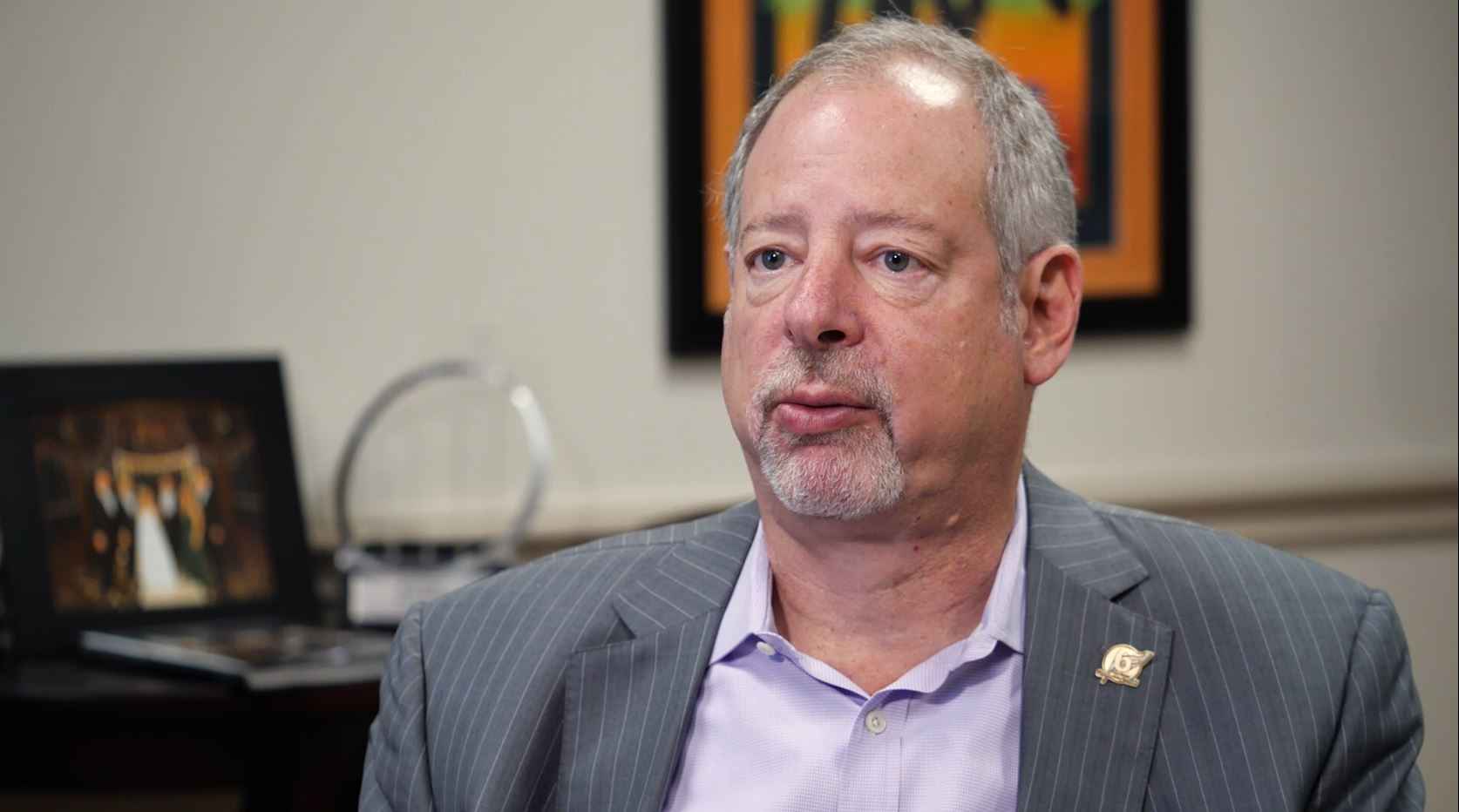
“When the hospital folds, you no longer have those services there and then you have to go significant distances to access them,” said Joe Freudenberger, CEO of OakBend Medical Center. “For the elderly and the poor, those can be insurmountable distances that they have to travel to get basic necessary care and they may even have insurance, but they just don't have either the ability or the means of transport, of getting from point A to point B.”
Freudenberger said OakBend, which is based in Richmond, saw the need for healthcare services in Wharton and opened a campus in the old Gulf Coast Medical Center building.
“It's peace of mind,” lifelong Wharton resident Brian Kielman told 13 Investigates about the hospital reopening. “It's here and it's right down the road and not 25 miles down the road. If there is something that's a big-time emergency, it's a lot closer than 25 miles down the road.”
May 15, 2023
By Daniela Hurtado and Sarah Rafique
Click play to watch the full investigation
What residents described as once a bustling hospital located in the center of Wharton’s quaint medical district is now a standing ER that serves a few dozen patients a day.
Still, Freudenberger said the ER, which has less than 10 beds, is “pretty busy” for its size and has doubled the number of patients it sees compared to when it first opened in 2018.
Currently, they see anywhere from 30 to 35 patients a day at OakBend in Wharton.
Freudenberger said when the hospital first reopened in 2018, they provided just emergency services and elective imaging. Now, he said, they’ve expanded to provide physical therapy and more elective imaging services, including X-rays, CT scans, ultrasounds and echocardiograms.
“Pre-COVID, we had our inpatient unit open and we plan to open that up again as soon as we can source the nurses to open up an inpatient unit,” he said. “That’s our goal. Find efficient ways to deliver care that provides local services instead of them having to travel into Houston.”
Still, Freudenberger admits there are limitations when it comes to operating a healthcare facility in a small town.
“(There were) doctors sometimes that were raised in the community, that stayed in the community and as rural America shrinks in size, in terms of population, you just have less people that aspire to go back to their home communities because that wasn't their home. They grew up in cities,” he said.
Kielman, a lifelong Wharton resident who calls it “Small town, USA,” said although his primary care physician has always stayed in Wharton, his mom’s doctor moved nearly 40 miles away to Sugar Land.
“Now we have to commute for her,” he said. “We don’t have a (full service) hospital either anymore. We had one, but now if you have a loved one in the hospital, you’ve got to travel to go see them. It’s not here, but it is what it is.”
‘Small Town, USA’
“Even though we don't have the same capabilities, nor would any rural facility have as compared to an urban, suburban facility, we can still do a whole lot more than the medics can in the ambulance in terms of treating you.”
Joe Freudenberger
CEO of OakBend Medical Center

WHARTON, Texas (KTRK) – Loretta Jackson grips the stairs outside the post office in Wharton as she carefully makes her way down the steps leading back to the main road.
She stands outside the historic building, located just off State Highway 60, and in between the rumbling sound of 18-wheelers cutting through the 8,600-person town, Jackson tells 13 Investigates about the difficulties of getting healthcare in the small community she’s lived in nearly all her life.
“At 71 years old, I’m scared,” Jackson said.
Loretta Jackson, 71-year-old Wharton resident
13 Investigates found Wharton is not the only small Texas town crippled by hospital closures and lack of local healthcare access.
Over the last decade, 26 rural hospitals have permanently or temporarily closed across the state, according to data from the Texas Organization of Rural & Community Hospital.
Statewide, 69 rural counties do not have a hospital. Our investigation found 77 of Texas’ 254 counties that do have rural hospitals do not have a labor or delivery unit, including Wharton County.
Growing up, Jackson said women could deliver babies at the town’s hospital and all the nurses and doctors knew all of their patients by name.
Now, she said, small towns are treated like “nobody,” leaving residents to rely on telemedicine and travel to other cities for specialized care.
“Big cities is what's going on now. Big cities and new innovations and stuff. That's what it is,” Jackson said. “It's a good thing for a generation that's coming up but for us old people, it's not good. It's really not. It doesn't help us at all.”
Freudenberger said right now, there’s not enough doctors in Wharton, but he hopes to recruit additional doctors to start serving the community this summer.
He said part of the staffing problem stems from the financial reality that there needs to be enough patients to justify a doctor spending their time in town, otherwise it won’t be sustainable long-term.
“If there's a demand, for example, they've asked for labor and delivery services and I said, ‘I'd love to provide labor and delivery services, but you have to have a bigger population delivering babies to make it self-sustaining, otherwise, I'm promising you something that I can't sustain and that is not what I'm going to do,’” Freudenberger said.
He said the hospital’s goal isn’t to make money. It just wants to break even to make sure Wharton doesn’t go without basic services again.
“We want to be as full service as we can. Now, there are limits on what we can provide simply because, as I promised the community, we're not going to come in here and stay a few years and then leave because we can't quote unquote make it,” Freudenberger said. “We're gonna make it because we're gonna design our services to meet what the demand is in the community.”
He said collaboration is one way to ensure smaller communities feel included when it comes to healthcare.
“I think there's a model for rural healthcare in the United States, but it requires creative thinking and it requires communities to kind of get comfortable with the idea that not everything is going to be done locally,” he said.
Freudenberger said one way smaller hospitals can save money to ensure they remain open and operational in their communities is sharing resources.
“You can share, for example, your accounting department. Does your accounting department have to reside in the community in which the hospital is? No. And can it be done more efficiently if it's done in a larger setting? Yes,” he said. “You want your ER, you want your inpatient services, you want your imaging. Do you need the administrative functions? And if the answer is we can do without that to save money to save the hospital, that's what we should consider doing. It's hard though. … Sometimes the hospital is the biggest employer in a smaller community and saying that we're going to move some of the staff that work here to another site or maybe not even have those staff, that's a bitter pill to swallow.”
Despite not having the same capabilities of hospitals in large cities, Freudenberger said it’s still important for rural towns to have some type of hospital in town.
“It's a huge, huge game changer, both on the chronic side and on the acute side where somebody is having an event that requires immediate intervention,” he said. “Even though we don't have the same capabilities, nor would any rural facility have as compared to an urban, suburban facility, we can still do a whole lot more than the medics can in the ambulance in terms of treating you.”
At 71 years old, Jackson said although she has arthritis, she’s blessed that she and her husband don’t have any major health issues.
Still, that doesn’t stop her from worrying about getting help in a small town.
“If something happened to my husband and he got to go to Houston, I go to downtown Houston, what am I going to do? I'm going to be scared because I don't know how to do that stuff,” she said. “What we need should be right here instead of going somewhere else.”